
The Story Behind the Menu
At Kilroy’s On The Square, every item on our menu tells a story.
From the sandwiches to the cocktails, our menu is inspired by the people, ships, and history that helped shape America during some of its most defining moments.
The Sandwiches
Every sandwich on our menu is named after a person, place, ship, or symbol connected to Quincy’s rich military and shipbuilding history.
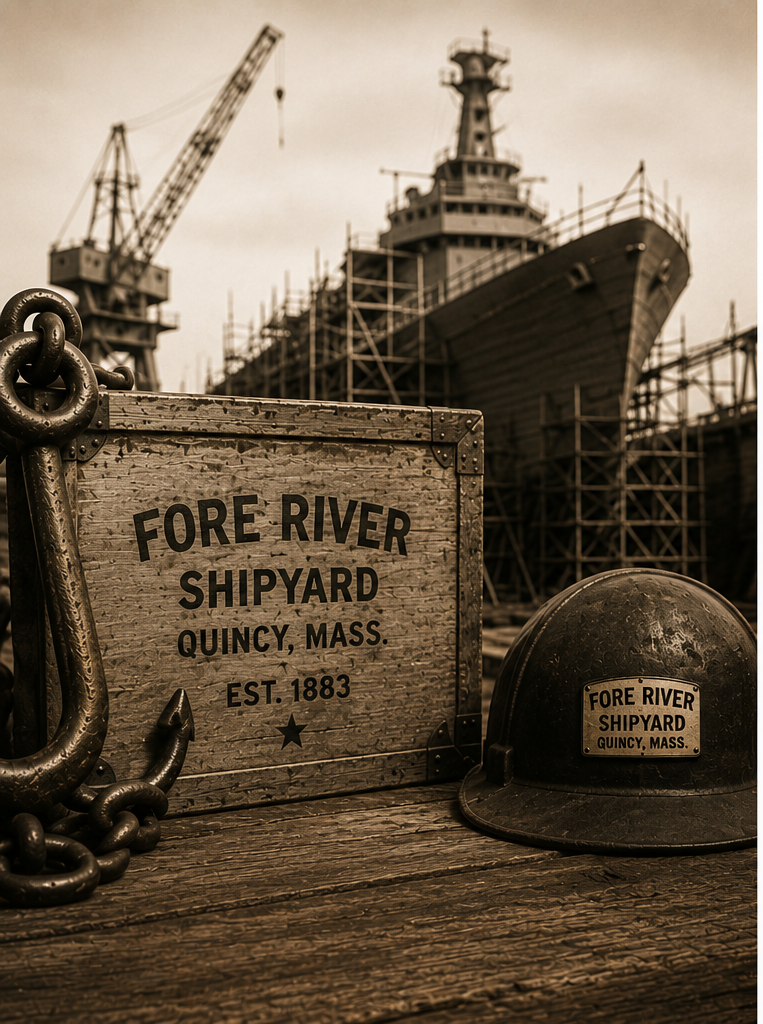
For more than a century, Quincy has been home to the Fore River Shipyard one of the most productive shipyards in the world.
Our sandwich names play tribute to this history.
The Fore River
Named for the Fore River Shipyard, the heart of Quincy’s shipbuilding industry. From 1883 to 1986, the yard built hundreds of vessels and employed generations of Quincy families.
The Kilroy
Inspired by the famous “Kilroy Was Here” cartoon that appeared on ships, military bases, and battlefields around the world during World War II. Kilroy became a symbol of American ingenuity, determination, and camaraderie.
The USS Salem
One of the most recognizable landmarks in Quincy today. Built at the Fore River Shipyard and launched in 1947, the USS Salem now serves as a museum ship and lasting reminder of the city’s naval heritage.
The USS Quincy
Named after the city itself, several U.S. Navy vessels have proudly carried the Quincy name. The most famous served during World War II and helped cement the city’s connection to American naval history.
The USS Wasp
One of the legendary aircraft carriers built at Fore River. The Wasp played a critical role in the Pacific Theater during World War II and remains one of the most celebrated ships associated with Quincy shipbuilding.
The USS Canberra
The USS Canberra, a Baltimore-class heavy cruiser, named in honor of HMAS Canberra, an Australian cruiser lost during the Battle of Savo Island. She is notable as the first U.S. Navy cruiser named for a foreign capital city.
The Cocktails
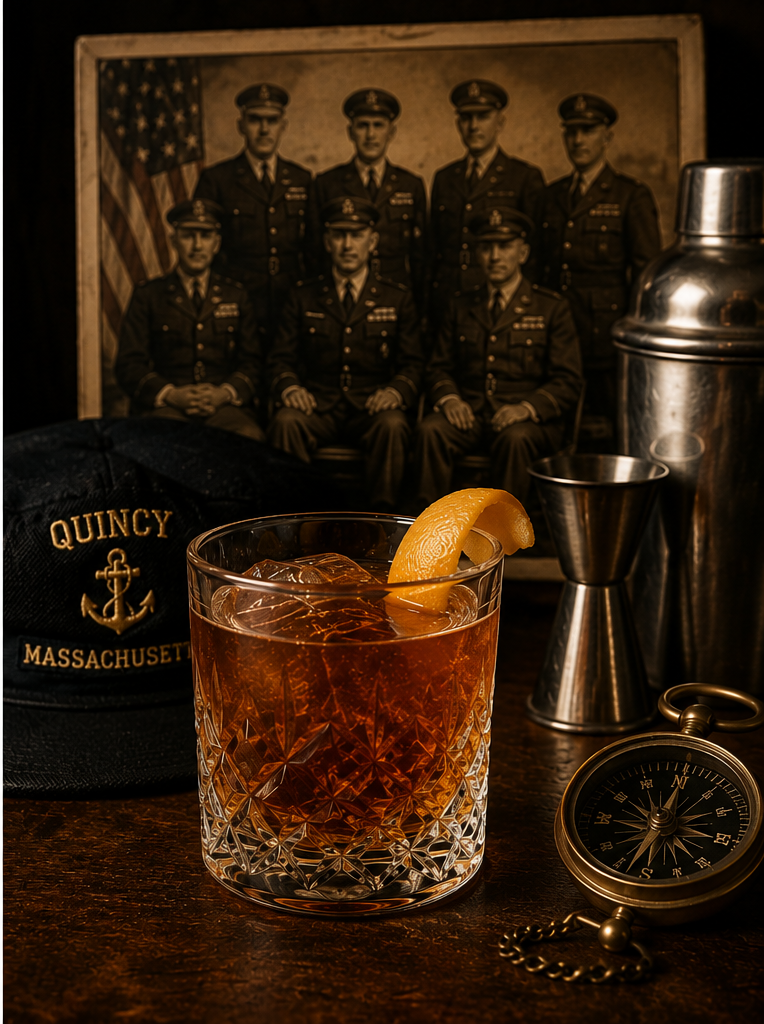
Our cocktail menu pays tribute to Quincy's remarkable place in American military history. Often referred to as the home of the "Seven Generals of Quincy," the city produced an extraordinary number of military leaders whose service helped shape the outcome of World War II and the decades that followed.
The majority of our signature cocktails are named in honor of these leaders, while a few celebrate other figures connected to Quincy's rich local heritage. Together, these cocktails celebrate Quincy's remarkable military legacy and the leaders who carried the city's name and values onto the national stage.
The Palmer
Named for General Joseph Palmer, a Revolutionary War patriot, militia leader, and one of Quincy's earliest influential citizens. Palmer played a key role in organizing colonial resistance in Massachusetts during the fight for American independence.
The Rand
Named for Brigadier General Ronald Rand, a retired U.S. Air Force officer who served as the Air Force's Director of Public Affairs. His career reflected a lifelong commitment to military service and leadership.
The Keefe
Named for Major General Stephen Keefe, a retired Air Force and Massachusetts Air National Guard leader. Keefe's distinguished career helped strengthen both state and national defense capabilities.
The Sweeney
Named for Major General Charles Sweeney, the Quincy native who piloted the B-29 Bockscar during the mission over Nagasaki in World War II. His service remains one of the most historically significant military contributions associated with Quincy.
The McGinn
Named for Major General Francis McGinn, a respected leader in the Massachusetts National Guard and advocate for veterans. His career was marked by decades of public service and military leadership.
The Dunford
Named for General Joseph Dunford, a retired four-star Marine Corps general and the 19th Chairman of the Joint Chiefs of Staff. He served as the nation's highest-ranking military officer and principal military advisor to the President.
The Sullivan
Named for General Gordon Sullivan, a retired four-star Army general and former Chief of Staff of the United States Army. He guided the Army through a transformative period following the Cold War and helped shape its modern structure.
The McConville
Named for General James McConville, Quincy native and the 40th Chief of Staff of the United States Army. As the Army's senior uniformed officer, he led more than one million soldiers and civilians worldwide.
